Source: Electronics Weekly.
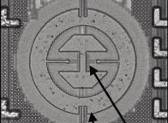
Imaging far-infra-red (sub-millimetre) radiation between 300GHz and 3THz could mean seeing several millimetres under the skin or inside teeth. It can be detected as heat, but at the International Solid-State Circuits Conference researchers, including a team from STMicroelectronics, described imaging it as RF radiation.
Key to this is a 32×32 array of square 80µm pixels, each dominated by a circular antenna (BW=0.6-1THz, lower arrow) built from metallisation, with two internal connections feeding anti-phase RF into a differential nmos distributed resistive detector made from a single novel 65nm n-mosfet (centre arrow).
Working in differential distributed resistive mode, said the team, allows the fet to work above its 160GHz fT.




 news center

 Copyright© 2006-2022 www.thznetwork.org.cn All Rights Reserved